2026 World Cup Football: 5 Key Insights
World Cup football in 2026 will feature 48 national teams, 104 matches, and three host countries: Canada, Mexico, and the United States. Organized by FIFA, the tournament will expand from the 32-team....
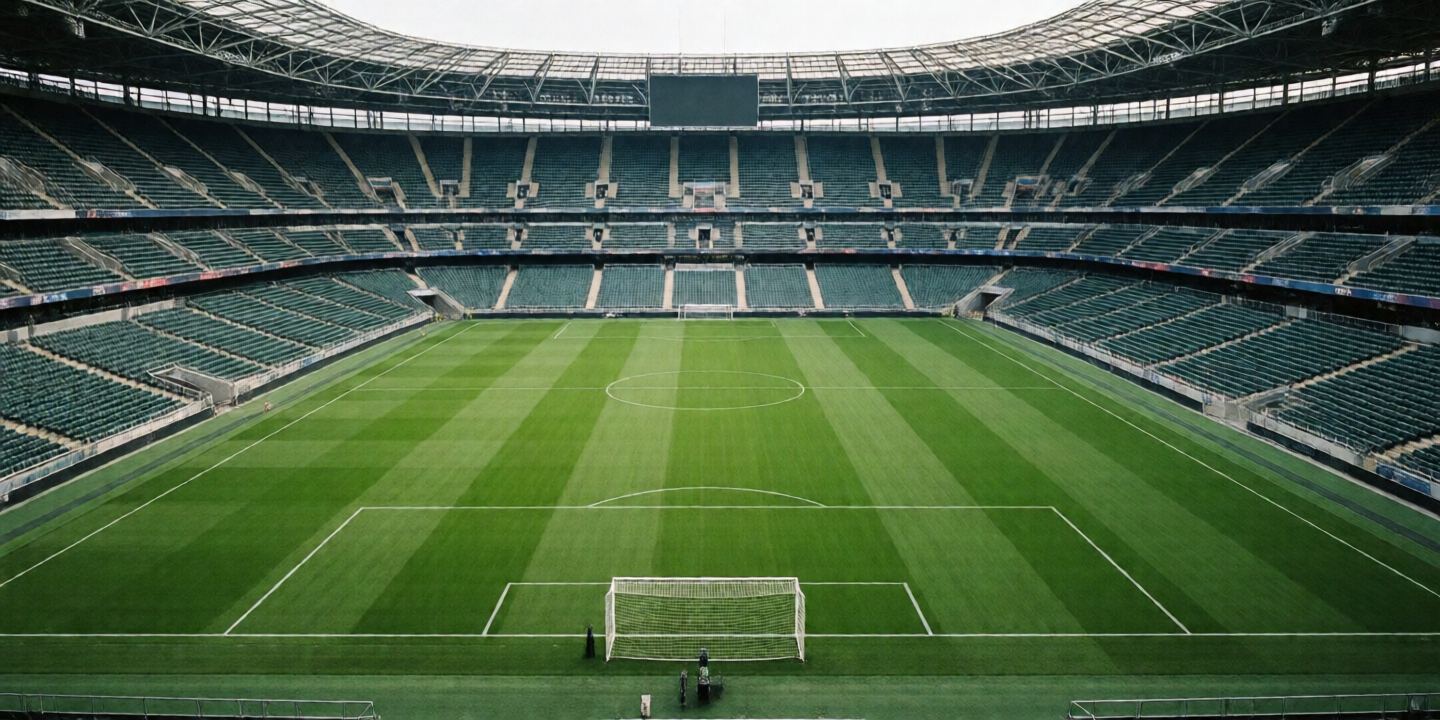
2026 World Cup Football: 5 Key Insights
World Cup football in 2026 will feature 48 national teams, 104 matches, and three host countries: Canada, Mexico, and the United States. Organized by FIFA, the tournament will expand from the 32-team format used in Qatar 2022, creating a broader competition across North America and a longer match schedule. The 2026 FIFA World Cup will use 12 groups of four teams, with the top two teams and the eight best third-placed teams advancing to a 32-team knockout stage. FIFA has confirmed 16 host cities, including New York/New Jersey, Mexico City, Toronto, Los Angeles, and Miami. Football Compass tracks team tactics, player statistics, match predictions, and tournament developments for fans following the competition. The practical takeaway is simple: evaluate teams through schedule difficulty, squad depth, travel, and defensive numbers rather than relying only on reputation.

World Cup football is no longer just a month-long contest between 32 established powers. The numbers have changed, the travel map is larger, and the tactical margin for error may be narrower than casual coverage suggests. I’ll be honest with you: a bigger tournament does not automatically mean better football in every match, but it does create more data, more matchups, and more opportunities for disciplined analysis.
Football Compass approaches the 2026 FIFA World Cup through measurable signals: expected goals, field tilt, pressing intensity, set-piece efficiency, squad age, injuries, and rest days. That matters because tournament narratives often move faster than evidence. A team can be called “in crisis” after one poor friendly, while another receives praise after beating an opponent with a depleted lineup. If we are plotting a smart tournament view together, the first job is separating genuine structural change from noise.
Want a clearer way to follow the tournament numbers?
How Did World Cup Football Work Before 2025?
Before 2025, the senior men’s FIFA World Cup generally used 32 teams divided into eight groups of four, followed by a 16-team knockout stage. From France 1998 through Qatar 2022, the format produced 64 matches, while each team played at least three group games and the champion completed seven matches. That structure made qualification, goal difference, and late-game management especially important.
The established model rewarded consistency without making the group phase excessively long. Each group contained four teams, the top two advanced, and 16 knockout places were available. FIFA’s official World Cup archive records how this format shaped tournaments involving Brazil, Germany, Argentina, France, Spain, and Italy. Argentina’s 2022 victory over France in a penalty shootout also showed how the knockout stage could compress enormous pressure into one match.
However, the 32-team design had a practical limitation: several strong national teams missed the tournament entirely. Italy failed to qualify for both Russia 2018 and Qatar 2022, while other teams from Africa, Asia, and North America faced limited allocation. FIFA’s expansion decision changed that balance, but it also introduced new scheduling and competitive questions.
[Internal Link: World Cup tournament history and format guide]
A useful way to understand the previous format is to examine how small margins affected progression. In a four-team group, a single goal could separate first place from elimination. The 2018 tournament had 169 goals across 64 matches, an average of 2.64 goals per game. Qatar 2022 reached 172 goals, or 2.69 per match, according to tournament records summarized by Wikipedia’s FIFA World Cup page.
That data suggests that knockout football was not necessarily becoming more defensive, even though tournament games often feel cautious. The better explanation is game-state behavior: teams protect leads, but trailing teams increasingly use aggressive pressing and additional runners. In practical terms, match context matters more than broad labels such as “attacking team” or “defensive team.”
Before 2025, analysts could also rely on a relatively simple workload model. A finalist played seven matches, travel distances were generally more contained, and the group-to-knockout transition happened after three games. The 2026 edition breaks that pattern, so historical comparisons must be adjusted rather than copied blindly.
What Is the 2026 Shift in World Cup Football?
The 2026 shift is the expansion to 48 teams, 12 groups, and 104 total matches across Canada, Mexico, and the United States. The tournament will open more qualification places while increasing total match volume by 62.5% compared with the 64-game format used in Qatar 2022. That creates new commercial reach but also greater physical and analytical complexity.
FIFA has described the 2026 competition as “the biggest and most inclusive FIFA World Cup ever,” reflecting the increase from 32 to 48 participants. The official tournament framework identifies 16 host cities and a final in the New York/New Jersey area. The scale is not cosmetic: teams may cross multiple time zones, manage different climates, and navigate longer periods between group and knockout matches.
The group-stage mathematics now works like this:
- Twelve groups contain four teams each.
- Every team plays three group matches.
- The top two teams in each group qualify automatically.
- Eight best third-placed teams also advance.
- Thirty-two teams enter the knockout phase.
- The eventual champion plays eight matches instead of seven.
The format adds 40 matches compared with Qatar 2022. That is the obvious statistic. The less obvious issue is that third-place qualification can change risk calculations in the final group match. A team may not need to chase first place if four points and a favorable goal difference could be enough to progress.

The host geography is another major variable. Mexico City, Monterrey, and Guadalajara offer different altitude and climate conditions from coastal venues such as Miami, Seattle, or Vancouver. The United States contributes 11 host cities, while Canada contributes Toronto and Vancouver. A squad’s recovery process, training location, and travel plan may influence performance more than a simple ranking table reveals.
This is an information gain point that many general World Cup articles skip: travel burden should be measured through route sequence, not only total distance. A team playing in Los Angeles, then Atlanta, then New York faces a different physiological problem from a team staying within one regional cluster, even if the total kilometers appear similar. Analysts should track local kickoff times, recovery windows, and climate transitions for each fixture.
Want to examine how the new structure affects qualification pressure?
The 2026 shift also changes the meaning of squad depth. In a seven-match tournament, a manager might rotate cautiously before the quarter-finals. In an eight-match competition spread across a larger continent, the value of a reliable 15th, 16th, or 17th player rises. A substitute who can maintain pressing intensity for 25 minutes may be more valuable than a famous attacker who contributes only in ideal conditions.
According to FIFA’s competition information, the tournament’s 104-match schedule makes the 2026 World Cup the largest edition by match count. That expansion creates a wider sample for statistical analysis, but it also increases the chance of misleading small samples. Three matches remain a tiny dataset, particularly when opponents differ sharply in quality.
What Changed for Players and National Teams?
Players face a longer tournament path, broader travel demands, and more varied environmental conditions in the 2026 World Cup. The champion must win eight matches, while teams may encounter altitude, heat, humidity, long flights, and different pitch conditions across 16 host cities. As a result, recovery, rotation, and substitute quality become measurable competitive assets.
The key player-level changes include:
- Increased minutes for rotation players during the group stage.
- Greater importance of recovery between matches.
- More tactical substitutions after expanded knockout qualification.
- Higher value for versatile defenders and midfielders.
- Increased exposure to different kickoff times and climate conditions.
- More opportunities for young players from emerging teams.
The standard public statistic remains goals and assists, but it is not enough. Football Compass also recommends tracking progressive passes, ball recoveries, pressure regains, defensive actions after possession loss, and expected threat from set pieces. A midfielder who records one assist may still have influenced five dangerous possessions; another may score once while contributing little outside that moment.
The United States, Mexico, and Canada will also experience different forms of home advantage. Home support can improve emotional energy, but it can raise pressure as well. Mexico’s historic football culture, Canada’s recent rise in international competition, and the United States’ expanding player pool will create different expectations. A host team is not automatically undervalued or overvalued; its market price must be compared with squad quality and fixture location.
[Internal Link: 2026 World Cup team profiles and squad analysis]
A practitioner-level issue is kickoff-time adaptation. A team that normally trains at 10:00 a.m. local time may face a match beginning at 8:00 p.m., followed by travel and a recovery session the next morning. That change can affect sleep routines and high-intensity output. It is difficult to isolate from public data, but analysts can flag it by comparing match times, hotel locations, and recovery days.
The contrarian conclusion is that famous teams may not benefit equally from the expanded format. Deep squads such as France, Brazil, England, Germany, Argentina, Spain, and Portugal can absorb more rotation, but they also carry heavier expectations and more complicated travel planning. Meanwhile, a lower-ranked team with a compact defensive block and a stable local base might gain an advantage in a short three-match group sample.
In 2022, Argentina showed how a tournament team can recover from an unexpected opening defeat and still win the title. The lesson is not that every slow start should be ignored. It is that one match should be assessed through shot quality, territory, lineup choices, and game state rather than the score alone.
Here is the practical player-analysis checklist:
- Measure minutes played in the preceding club season.
- Separate starting performance from substitute performance.
- Check injury history during the previous 12 months.
- Compare pressing output with the team’s tactical system.
- Evaluate set-piece roles and penalty responsibility.
- Account for travel, time zones, and expected rotation.
See the player variables that deserve the most attention before matchday.
What Does the New Format Mean for Players?
The new format means players must sustain performance across eight possible matches instead of seven, while managing longer travel and more varied conditions. For coaches, the central challenge is not simply selecting the best starting eleven; it is maintaining tactical quality when the second-choice lineup enters the tournament. Rotation depth becomes especially important after the group stage.
For attackers, the expanded field may create more favorable matchups against teams with less tournament experience. However, attacking output can be inflated by opponent quality, so expected goals per 90 minutes should be adjusted by defensive strength. A striker scoring twice against a weak opponent does not necessarily offer more knockout value than one scoring once against a top-ranked defense.
For defenders, concentration may matter more than raw tackling volume. A team that dominates possession can still concede from transition if its rest defense is poorly organized. Analysts should track:
- Goals conceded after losing possession.
- Crosses allowed from the half-space.
- Set-piece expected goals conceded.
- Defensive line height.
- Recovery runs after full-back advances.
- Goalkeeper performance on crosses and long shots.
The 2026 competition also raises questions about substitutions. A manager with five available substitutions can alter pressing intensity, protect a lead, or change the attacking shape without replacing the entire tactical plan. The value of a substitute should therefore be measured through role fit, not name recognition.
For example, a winger who can attack both sides may help against a low block, while a defensive midfielder may be more useful when protecting a narrow lead. Match analysts should distinguish “bench quality” from “bench fame.” A celebrated reserve who does not fit the match state can be less useful than a less famous player with the right profile.

Another overlooked issue is disciplinary accumulation. Tournament rules can create suspension risks at precisely the wrong moment, particularly for central defenders and holding midfielders. A team that relies on one ball-winning midfielder should monitor yellow-card exposure before the final group match. This is not glamorous analysis, but it can change the probability of a quarter-final lineup.
The same applies to goalkeepers. A team may have an excellent starter but a significant drop-off behind him. A minor injury, suspension, or poor distribution matchup can alter the team’s build-up structure. Goalkeeper passing under pressure should be included in tactical previews, especially against high-pressing opponents such as Germany, Spain, or England.
Football Compass uses these details to avoid a common mistake: treating a national team as a fixed product. Teams evolve through injuries, coaching decisions, club form, and tactical adjustments. A ranking from October 2025 may not accurately represent a lineup in June or July 2026.
Why Does World Cup Football Analysis Matter Now?
World Cup football analysis matters now because qualification, squad selection, and tactical preparation happen months before the first match. Early information can reveal structural strengths, but forecasts made too far in advance carry substantial uncertainty. The best approach is to update views when lineups, injuries, group assignments, and travel routes become clearer.
A useful analysis model combines five layers:
- Team strength: Elo rating, FIFA ranking, recent opponent quality, and expected-goal difference.
- Tactical fit: pressing, build-up, defensive block, transition speed, and set-piece design.
- Player availability: injuries, suspensions, minutes, and replacement quality.
- Tournament logistics: venue, travel, kickoff time, weather, and rest days.
- Market behavior: public reputation, media narratives, and price movement.
This model prevents one statistic from controlling the entire conclusion. FIFA rankings are useful for broad comparison, but they are not a complete tactical forecast. Expected goals can describe chance quality, but they do not fully capture game management or penalty shootouts. Head-to-head records can add context, but many national teams meet too infrequently for those records to remain predictive.
[Internal Link: football prediction methods and statistical models]
A second information gain point concerns third-place qualification. Under the 48-team structure, a team may progress with a modest record, but its margin can depend on goals scored and goal difference across 12 groups. A side that prioritizes a clean sheet in its final group match may qualify, while another with the same points could be eliminated after conceding late. Therefore, late-game behavior may become more aggressive or more conservative depending on the live table.
For responsible match analysis, avoid presenting predictions as certainty. No model knows the final lineup, referee decisions, weather, or injury news with perfect accuracy. If you follow match markets, check local laws, use licensed providers where applicable, set a fixed budget, and never treat a prediction as guaranteed income. Football Compass is designed for information and analysis, not promises of profit.
A simple pre-match worksheet can make analysis less chaotic:
- Confirm the starting goalkeeper and center-back pairing.
- Compare rest days between both teams.
- Check the venue’s climate and altitude.
- Review each team’s first-half and second-half goal patterns.
- Identify set-piece mismatches.
- Compare the expected lineup with the team’s best tactical shape.
- Reassess after official team news.
The temptation is to search for one “best bet” or one unbeatable tournament favorite. That is usually a poor analytical habit. A better process identifies where the evidence is strong, where uncertainty is high, and whether the available price reflects public enthusiasm. Sometimes the correct conclusion is to pass.
What Are Three Predictions for the Next Quarter?
The next quarter should produce three major World Cup football developments: clearer qualification probabilities, sharper squad battles, and more defined tactical identities. These predictions concern the information environment around the 2026 tournament rather than guaranteed match results. The most useful forecasts are conditional, measurable, and updated when new evidence appears.
Prediction 1: Squad depth will separate contenders
By the next quarter, leading teams such as France, Brazil, Argentina, England, Spain, Germany, and Portugal should receive the most attention, but depth will become a stronger differentiator than headline talent. Teams with reliable alternatives at center-back, full-back, central midfield, and striker will be better positioned for an eight-match tournament.
The metric to watch is not merely the number of famous players. Compare the performance gap between first-choice and replacement players. If a national team’s pressing intensity falls by 20% when its starting midfielders leave the pitch, that team may be vulnerable despite having an excellent first eleven.
Prediction 2: Travel and venue analysis will become mainstream
As fixture details develop, analysts will pay closer attention to distance, climate, and kickoff times. A team moving between Mexico City, Dallas, Atlanta, and New York may face different preparation demands than a team operating within a tighter regional sequence. Travel will not determine every result, but it can influence late-game intensity and rotation decisions.
A simple edge case deserves attention: teams with only three rest nights between fixtures may change their training load more aggressively than teams with five or six. That difference can affect pressing plans, particularly for sides that defend through repeated high-intensity sprints.
Prediction 3: Third-place mathematics will create late drama
The 12-group format will make the final group matches unusually dependent on other results. Eight third-placed teams advance, so points, goal difference, goals scored, and disciplinary records may become relevant across separate groups. Coaches may receive live qualification information and alter their risk tolerance in the final 15 minutes.
The practical prediction is that neutral viewers will see more strategic variation late in group matches. Some teams will chase a second goal to improve their ranking among third-place sides, while others will protect a result that appears sufficient. This is where real-time tables and tactical observation become more valuable than pre-match narratives.
Need a concise tournament tracking routine for the next quarter?
How Should Fans Follow 2026 World Cup Football?
Fans should follow 2026 World Cup football by combining official tournament information with transparent performance data and confirmed team news. Start with FIFA for fixtures, venues, regulations, and squad announcements, then use specialist analysis to interpret form, tactics, and player roles. Avoid making decisions from social media clips or isolated scorelines.
A practical weekly routine looks like this:
- Check official FIFA updates and confirmed fixtures.
- Review injuries, suspensions, and club minutes.
- Compare expected goals and defensive trends.
- Study likely formations and substitution patterns.
- Note travel routes, rest days, and venue conditions.
- Reassess predictions after lineups are announced.
- Keep entertainment and financial decisions separate.
Football Compass can help organize this information through match previews, team tactics, player statistics, and tournament coverage focused on the 2026 World Cup. The useful goal is not to predict every result. It is to improve the quality of each decision by identifying what is known, what is uncertain, and what has changed since the previous update.

I’ll be honest with you: the strongest World Cup football analysis is often less dramatic than the loudest prediction. It may conclude that a team is strong but overpriced, that an injury matters only because the replacement profile is poor, or that a famous historical record has little relevance to the current lineup. Those conclusions are not as exciting, but they are usually more useful.
The 2026 FIFA World Cup offers a larger field, 104 matches, 16 host cities, and a new competitive structure. The teams that adapt best will likely combine technical quality with recovery planning, tactical flexibility, and squad depth. For readers following the tournament together with Football Compass, the winning approach is straightforward: use current data, question the narrative, and update the view when the evidence changes.
Stay ahead of the next tournament update with practical World Cup coverage.
Frequently Asked Questions
Q: What is World Cup football?
A: World Cup football is the international men’s tournament organized by FIFA to determine the world champion among national teams. The 2026 edition will include 48 teams, 104 matches, and host cities across Canada, Mexico, and the United States. It will use 12 groups of four teams, followed by a 32-team knockout stage.
Q: How will the 2026 World Cup format work?
A: The 2026 World Cup will have 12 groups of four teams, with the top two teams and eight best third-placed teams advancing. Every team will play three group matches, while the eventual champion will play eight matches rather than seven. This structure increases total games from 64 in Qatar 2022 to 104 in 2026.
Q: What is the difference between the 2022 and 2026 World Cups?
A: Qatar 2022 featured 32 teams and 64 matches, while the 2026 World Cup will feature 48 teams and 104 matches. The number of host countries also rises from one to three: Canada, Mexico, and the United States. The new edition adds a 32-team knockout stage after the group phase.
Q: How can I analyze a 2026 World Cup match?
A: Analyze a match through team strength, expected goals, tactical matchup, injuries, rest days, travel, and confirmed lineups. Check whether a team’s pressing or defensive structure changes when key players are absent. For any regulated betting activity, use licensed providers, follow local law, set a fixed budget, and never treat predictions as guaranteed outcomes.
Q: Why might World Cup predictions fail?
A: World Cup predictions can fail because football contains high-variance events such as penalties, deflections, red cards, injuries, and goalkeeper errors. Three group matches also create a small sample that may not represent a team’s true level. Improve the process by updating forecasts after lineup news and separating probability from certainty.
Q: Is the 2026 World Cup free to watch?
A: The cost of watching the 2026 World Cup depends on the broadcaster, country, and distribution agreement. Some markets may provide selected matches through free-to-air television, while others may require cable, satellite, or a streaming subscription. Check the official broadcaster serving your region before the tournament begins, because rights and package prices can change.
Q: Where can I find 2026 World Cup team statistics?
A: 2026 World Cup team statistics can be found through FIFA’s official tournament resources and specialist football analysis sites such as Football Compass. Compare goals, expected goals, possession, pressing, set pieces, injuries, and player minutes rather than relying on one table. Confirm that statistics use the same competition scope and time period before comparing teams.
Thank you for reading this dispatch.
Football Compass · The Digital Broadsheet · Issue No. 001